Beautifully and Wonderfully Made

A Catholic PA’s Reflection on Modern Medicine and the Real Root Cause of Disease


That Time I Sent Way Too Many Texts in a Row

Recently, a friend bemoaned to me how difficult it was to make the right medical decisions for her children. I agreed. It’s hard for me to know what to do, and I know what to do. I spent seven years of undergrad and graduate school studying the human body, did a year-long post-graduate fellowship working grueling hours where I celebrated the rare “golden weekend” when I had both Saturday and Sunday off, am somehow already up to take my boards again, and have worked nearly a decade in pediatrics as a physician assistant. My days are spent giving advice to twenty different patients using all the brain cells I can rally together nine months postpartum.

While I’m confident in my abilities as a provider, it’s still hard to be sure I’m making the right decision every time. I say this with my full heart. In fact, I pray a rosary every Monday morning on my way to work specifically for the intention that God will guide me in how to best care for my patients that week.

I empathize deeply with my friends and patients outside of the medical field. There’s a lot thrown at all of us every day. Medical studies use sophisticated methods and data interpretation strategies. It’s challenging even for those of us who read medical journals all day long to distinguish a real gem from fool’s gold. What statistical analysis methods were used? What was their sample population? What biases do the authors have, implicit or not?

And then… Some influencer with an iPhone comes along on and talks about how you should avoid (medical intervention) because (study taken out of context said so) and instead take (supplement influencer hawks). Or, a doctor states they are the only one reporting (a finding) that (has been kept hidden) and (everyone) is lying to you! Or, your own doctor suggests (a treatment) that you find (repulsive) and (is he actually a real doctor or is his first name just doctor?). Or, a news source you trust posts that (something you eat daily) causes (horrible disease). Or, a certain HHS secretary comes aboard and says (something) and then (someone else) retracts (something) and (everyone is confused).

When my friend expressed her frustration with knowing who and what sources to trust, I, just so smart, texted her a fancy slide of the Hierarchy of Evidence and proceeded to tell her how healthcare providers interpret data. At the base are individual patient case reports, and at the top are meta-analyses. I described how we utilize all of this, what the studies are, blah blah blah (so boring).

Then, I realized that’s not what this is really about. It is, but it also isn’t.

I apologized. Well, what I actually texted was, “Sorry, you did not come here for a college lecture. I see now how I super over replied. Please excuse me hahaha.”

This conversation led me to think. What actually needs to be said on Al Gore’s internet that hasn’t been said already? At first, I desperately wanted to make a Substack post on how providers interpret data, why we recommend what we recommend, how truly difficult it is to actually “do your research”. My job is hard! I didn’t go into one of the lowest paid specialties to hurt children! I love making kids better! Thankfully, there are already plenty of providers online posting evidence-based information in easy-to-digest bits, and I’ll share some of my favorite online follows at the bottom of this post. I didn’t just want to add to the noise of an already-saturated and overwhelming region of the interwebs.

I paused, pondered, and then realized where the truth actually lied.

After my magnum opus of in-the-weeds-science-stuff texts, I sent back, “There’s a lot of unknowns, and there’s going to be a lot of different answers, because GOD IS SO MAGNIFICENT.”

This is a treatise on the unique, miraculous nature of the human body. I’m not offering medical advice, and if you need some, please seek a trusted healthcare provider (who may in fact be me if your kids are my patients!). I’m not going to go on ad nauseum about autism or vaccines or Tylenol or parasites. What I am going to do is explain the wonder of medicine that I think sometimes gets lost in the textbooks and MCATs of it all.

Medicine is hard.

Know why?

Because humans didn’t design the human body.

My brand new Toyota Sienna, my beloved with its sexy sliding doors that I love so dearly, has a recall on it with no fix in sight after months and months. A Toyota salesman recently said to us, “The Sienna recall is just for the second row. Can’t you just use the back row only?”

Sir, I know this may be hard to believe, but I did not get a minivan for the cool-factor alone. I can assure you all the rows and car seat latches are very much needed.

I digress.

Toyota will be able to fix the car (someday… allow me to pause and take generous swig of wine) because Toyota designed the car. There’s not going to suddenly be a surprise part that was found while looking for something else. Our engine isn’t in the trunk while someone else’s is under the hood, you know?

The human body, meanwhile, is awe-inspiring. Each is unique. We are the pinnacle of an all-powerful God’s creation. We are made in the image and likeness of the Almighty. Who am I to think I will ever understand everything about the very thing that is a design of the one and only LORD?! We are the result of eons of slow evolutionary design and the intricate knitting of a soul and body from God’s own mind. We breathe because God breathed life into man. You are here because of the intentionality of God.

I am a big nerd. Massive. Huge. There can be a fear among some Christian sects that the deeper you delve into the science realm the more you’ll float into atheism. My experience has been quite the opposite. The absolute magnificence of God, the complexities of His handiwork, are so obvious to me in every biochemical pathway. The Krebbs cycle? Beautiful. The creation of adenosine triphosphate? Incredible. The more I learn the more I come to realize, in the words of our fearless leader Taylor Swift in her Mastermind lyrics, “None of it was accidental.”

The best medical advice related to my career choice came from my own nephrologist. I was a medical mystery at 19-years-old. My kidneys had failed after a track race and no one could tell me why, not even the top doctors at a top research institution. I laid in a hospital bed for almost a week on a liquid-only diet with talks of dialysis and transplant. Then one day, I just started getting better. I kept getting better, and then I just was better. My kidneys appeared diseased on both ultrasound and labs, and yet the biopsy came back so *chef’s kiss* that the slide was used for the hospital’s medical students to see what a healthy kidney looked like. My doctor, decades into her practice and knowing I was an aspiring provider, said, “People think we know everything. We know a lot, but there’s more we don’t know.”

This Ain’t Your Grandmother’s Tapeworm Diet

I firmly believe the best thing a healthcare provider can be is curious. I’ll take a doctor who says, “I don’t know, but let’s see if we can find out,” over an overly-confident brilliant a-hole any day. The minute we as providers stop asking questions is when patients get hurt.

We laugh at generations past because weren’t they just so silly with medicine? Blood-letting for infections? Leeches? Lobotomies? Tapeworm diets?

Here’s the thing, though. We aren’t all that advanced. Consider the antibiotic penicillin- it was discovered on accident less than a century ago. Humans have been around a whole lot longer than that. New things are discovered every day, and advice is going to change with novel information.

I think there’s an underlying fear of, “What are we doing now that we will be appalled at in fifty years? What are we missing?” This is especially true when our kids are at stake. I can’t decide if I’m slowly hurting them from the inside out by giving them boxed macaroni and cheese, for crying out loud. It makes sense that we would be a bit trapped at all the information flying at us when it comes to what we inject in their bodies or the medicines we use or the dietary recommendations that seem to change with the seasons.

Increasingly, I see a clawing for control in the medical realm. I experience it myself. We are in an absolutely astonishing era in medicine and wellness with so many tests and treatments available. Despite all this, even with all the advances we have, tests are vague. For the most part, I can’t get a clear picture from just one result. The CBC, the workhorse of the laboratory world, is just a starting point. I recently had someone ask me why we couldn’t get all the information we needed from just a drop of blood. I agreed it would be nice, but also so did the founder of Theranos, and that endeavor, um, did not go well.

It can seem, though it isn’t true, that absolutely everything can be prevented or cured. Death is a thing that happens to old people when the body is ready.

In a wealthy nation with practically everything at our disposal, it makes sense that we have an illusion of control over our health. It is just that, though- an illusion. You can do everything “right” and still get cancer or sepsis or kidney failure.

I don’t say this to cause fear. Quite the opposite. At the end of the day, each miraculous breath we take is a gift. “What is your life? For you are a mist that appears for a little while and then vanishes.”1 Some health decisions are literally life-or-death, and I don’t mean to undermine the gravity of this. You may be caring for someone right now and are determining whether to start hospice or continue treatment. I have been there too, my friend. It is agonizing and I will be praying for everyone reading this.

And yet, and yet. The Lord is the author of life.

Remember Who the Real Enemy Is

Beyond the miraculous complexity of the human body, we arrive at the root cause of disease, that thing that every crunchy (hey, me included) person wants. Spoiler alert, it’s not a gut biome imbalance or too many cans of the nectar of the gods (Diet Coke).

It is this simple fact: Evil exists and is in this world. That is it. We rest in that beautiful Catholic both/and: God is in control AND it wasn’t supposed to be like this. Eve ate the apple and now we get sick, we lose function of body parts that should be functioning, and we die.

Much of my career is spent combating the effects of evil, something that can only be treated with the aid of the Divine Physician. How incredible to have God give us silly lil’ humans the ability to create the scientific method, to discover amoxicillin treats ear infections, to realize hand washing stops the spread of germs! It is all of Him.

This is also a word of encouragement to my fellow healthcare providers, or those caring for the ill in their communities and families. Illness, frailty, and suffering are redemptive but at the end of the day are the ripples of sin. Not necessarily of a particular person’s sin, but in a more broadly-speaking way. “Like a roaring lion your adversary the devil prowls around, looking for someone to devour.”2 We can throw our anger against an artificial, though sometimes loud, enemy in the healthcare space, whether it be the government or the influencers or the bad doctors or the wellness/insurance/pharmaceutical industries or the hedge funds buying out family practices and churning them into money-making factories. It all sucks, sure, but then there’s that both/and again. It sucks AND what an honor to unite myself to a corporal work of mercy every day I put my stethoscope around my neck and heal the sick.

Seek Counsel

The next time you’re overwhelmed by it all, whether it be a vaccine schedule or a decision about surgery, as much as you can, abandon it all to Divine Providence. Learn what you can and leave the rest to God. His thoughts are so far above our own. “For what human knows what is truly human except the human spirit that is within? So also no one comprehends what is truly God’s except the Spirit of God.”3

Also, seek wise counsel especially for the big things. Get second opinions. Forgive me for dropping such a big bomb at the very end of an essay, but I had brain surgery in 2021. It was the big kind that involved an all-day-long surgery, ICU stay, needing a walker to brush my teeth kind of business. My surgeon recommended getting a second opinion, which I did, which cemented both that I wanted surgery and which surgeon I wanted it with (Spoiler alert: It was the first one, the doctor who’s online bio stated he liked to read about neurosurgery in his free time).

The wise counsel I really am focusing on, though, is from the Big Guy. This was a surgery that wasn’t emergent and had (not a lot, but some) time to stew over what to do next. It was a decision made drenched in prayer. Specifically, the sacrament of the Anointing of the Sick moved me in a way I had never experienced.

The day before my surgery, my husband and I met with a priest dear to us in a small chapel where he administered the sacrament of Anointing of the Sick. What I encountered cannot be summed up in any human words other than peace. As my husband and I drove home after, I had utter, complete clarity. I wanted to get the surgery and not in a panicked, fear-of-the-future kind of way. I just saw it as the most obvious choice and wasn’t attached to an outcome. In ordinary life, I’m inclined towards anxiety and solving difficult problems with thorough evaluation. Instead, in this moment, my mind was clear and was I was given the precious gift of knowledge wrapped in a Marian “let it be done according to Your word” attitude.

Having experienced this clarity before, I now can recognize the moments God has given me this kind of peace since then and I am astounded and grateful every time. I pray you experience this as well in whatever decisions you have. Frequenting the sacraments of the Eucharist and confession help me see God’s will clearer, and I encourage this for you as well if you don’t already.

It’s Gonna Be Okay

Yes, I have recommendations as a provider that I’m confident in, and I do think vaccines and antibiotics and modern medicine in general are great things that you should talk with your doctor about. But (and here comes that sneaky both/and again!) I also didn’t design the human body. I’m just a student of life over here in awe of a God who makes beautiful things. I hope you find people in your corner who want the best for you and listen to you and aren’t afraid to tell you hard things and good things. I want you to know that at the end of the long day of waiting for your late PA to see you (sorry), you have a God does and did all of the following: made you, knows you, loves you, loves your babies even more than you do, has a plan for you, wills your good above all, and is just so stinking excited to see you in heaven forever and ever where there is no pain or illness or tears or wellness influencers selling methylene blue.

You are so loved, do you know that?

James 4:14 NRSV

2 1 Peter 5:8 NRSV

1 Corinthians 2:11 NRSV

A few Instagram follows worthy of your attention: (Note, I don’t agree with EVERYTHING they say all the time, don’t @ me. These are just people I feel approach things *in general* without political bias and speak the facts of the science and discuss the American healthcare system with clarity.)

– @dr.beachgem10

– @dr_rossome

– @docglauc

– @thecheckuppodcast

– @biolayne
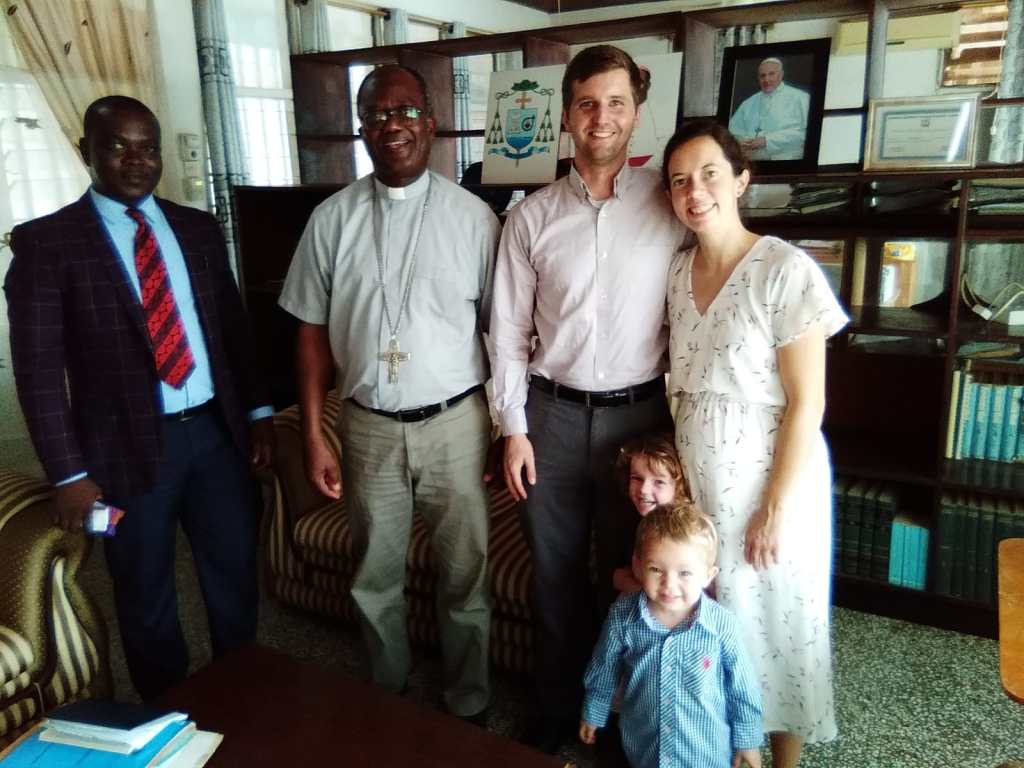
15. Serving in Long-Term Medical Missions While Raising a Family, with Dr. Robyn Jennings, family medicine

Welcome back, everyone! You can listen to episode 15 anywhere you listen to your favorite podcasts, or you can listen online here.

Episode 15 is with Dr. Robyn Jennings, a family medicine physician who serves with Mission Doctors Association, a Catholic organization that provides medical care for the poor and training for local healthcare professionals.

While we’ve talked medical missions on this podcast before, this episode brings the fresh perspective of long-term medical missions with a family- and Dr. Jennings was preparing to leave for another mission when we talked!

We talk about:

  • Dr. Jenning’s conversion to Catholicism
  • Long-term medical missions and her experiences serving abroad in Ghana, Honduras,  and Tanzania (as a student)
  • Practicing medicine without the ease of access to supplies/tests/specialists
  • Living abroad on mission with children
  • Dating and marriage in medical school

 We reference:

We reference the books Old Pioneers and Death Comes to the Archbishop by Willa Cather, and Jo’s Boys by Louisa May Alcott.

Follow us on Instagram @practicingcatholicmedicine

I am seeking new guests! If you have anyone you’d like to nominate, please go to our website and click the nominate tab. I’d love to hear from a wide range of professions in healthcare!

The views expressed by my guests and myself are not necessarily those of our employers, and this podcast is not meant to intended to replace medical advice from a licensed provider. Please see your healthcare provider for any medical concerns.

St. Gianna, Pray for Us!

Wishing you all the best!

In Christ

Catie

14. Counseling, Motherhood, and Faith, with Lisa Gormley, LLC, MA, LPC

Episode 14 is with Lisa Gormley (LLC), MA, LPC.

Lisa provides beautiful insights into what it’s like on the other side of the counseling session, to be the counselor. She has some excellent thoughts on what it means to honor your healthcare license while practicing ethically and as an authentic Catholic. You can listen online here, or on your favorite podcast streaming service.

We chat about:

  • Complicity and scrupulosity versus being present to another and approaching with a listening ear first.
  • Motherhood and mental health in pregnancy and post-partum period
  • Integrating therapy and Catholicism
  • The “pray it away” culture and the damaging implications of that.

We reference/check out:

  • Lisa’s public Instagram profile @TheCatholicTherapist, and http://www.thecatholictherapist.org
  • Lisa’s Instagram group @catholiccliniciansnetworking- join for a community of healthcare professionals!
  • Lisa’s podcast, Mission Mind & Heart
  • The Reed of God by Caryll Houselander
  • The Catholic Guide to Depression by Dr. Aaron Kheriaty
  • Resisting Happiness by Matthew Kelly

I hope you enjoy!

– Catie

** The views expressed in this podcast by myself and my guests are our own and do not represent those of our employers. This podcast is not intended to be a substitute for medical care. Please see your healthcare provider for any medical needs. This podcast is not intended to diagnose or treat any medical condition. Please see your healthcare provider for any healthcare needs.**

13. DNP, Compassion, and Singleness, with Marissa Mullins, APNP

Episode 13 is here with a fantastically fun conversation with Marissa Mullins. Marissa worked as an ER nurse for many years, and just graduated with her Doctorate of Nurse Practitioner.  You can listen online here, or on your favorite podcast streaming service.

I was eager to talk with Marissa because we share a mutual friend in Claire, the host of the Catholic Feminist Podcast. Marissa was on TCF several years ago (listen online here), and I knew she would be a great guest for PCM.

In this episode, we chat about:

  • Marissa’s experience as a travel nurse in the ICU, and as an emergency department nurse
  • How she navigated the more challenging days in the ED, including processing trauma and setting appropriate boundaries
  • The gift and experience of anticipatory grief, and the importance of honesty in the reality of diagnoses
  • Her decision to pursue a degree as a FNP and the different roles nurse practitioners can have
  • Masters versus Doctorate NP programs
  • Singleness in late 20s/early 30s and what people who are single want their married friends to know
  • Not comparing crosses with others

We reference:

I hope you enjoy this episode as much as I enjoyed talking with Marissa!

In Christ,

Catie

** The usual boring disclaimer: The views expressed in this podcast by myself and my guests are our own and do not represent those of our employers. This podcast is not intended to be a substitute for medical care. Please see your healthcare provider for any medical needs. This podcast is not intended to diagnose or treat any medical condition. **

12. Not Your Grandma’s Rhythm Method: A Conversation With Marquette Method Instructor Louise Boychuk, BScN RN

Did you that there are non-hormonal, peer-reviewed, evidence-based, ways to prevent (and achieve) pregnancy that are all about helping women know their bodies better, can also help to achieve pregnancy, and recognized by the CDC? In episode 12, I’m talking with Louise Boychuk, a registered nurse and instructor of the Marquette method of natural family planning.  You can listen online here, or on any of your favorite podcast platforms.

Louisephoto

This is NOT your grandmother’s rhythm method of old. This is a peer-reviewed, evidence-based, non-hormonal approach to avoiding (AND achieving) pregnancy. Natural Family Planning (NFP), also known as Fertility Based Awareness Methods (FABMs) in the scientific community, uses signs from a woman’s body to determine when she is fertile (and, also importantly, when she is most likely very not fertile). Methods can use a variety of different biological markers, from cervical mucous, to hormone levels in urine that can be tested at home, to body temperature, and more.

This is easily one of my favorite topics, most notably because I used to be ardently opposed to what I thought the Church taught on sex and marriage. As you’ll hear in the episode, up until my early 20s, I thought the church was kah-ray-zee when it came to its teaching on sexual ethics and not using contraception. I figured that anyone not contraception was probably either pregnant or immediately post-partum. My (wrong) understanding was that the Church just wanted women to be, as the old adage goes, “barefoot and pregnant”, forever and ever.

(FYI-To all of those who are currently in that scenario, I see you, I hear you, I get you, and I hope you’ll hang in there with me through this post and this episode.)

Enter a good friend, a lot of reading, holy priests, wonderful speakers, and a two-year stint as a Catholic missionary. I was led on a journey that started as me acting like an angry toddler as I realized I was very wrong, leading to joy at discovering the truth of how insanely awesome God’s design for sex and marriage is.

Here’s the TL;DR version of the Church’s teaching on sex and marriage: Sex is meant to be both unitive and procreative. Unitive meaning that it brings a man and woman closer together emotionally, physically, all the things. Procreative in that it’s open to life, so no barriers, either physical or chemical. Abstaining from sex during fertile times to avoid pregnancy for just reasons is still in line with the church’s teaching because there is no use of something to purposefully block fertility. Also in line with church teaching are situations where the couple physically could not get pregnant because of a myriad of other reasons, such as menopause or a hysterectomy. It is the intention that there is a total giving of oneself, saying “I accept all of you, even your fertility.” As Louise says in our episode, “Marquette method does not equal opposed to life, it just equals good science.” These teachings aren’t in place because the Church thinks sex is bad, it’s because the Church knows sex is so good, and sacred, and important- it needs to be treated as such!

Yes, using NFP to avoid pregnancy requires abstinence, the number of days depending on the individual woman and method, which can be difficult. Also, some women experience difficult-to-interpret fertility signs (which is one of the reasons I love Marquette- it’s very objective), and of course, there is always the chance of a surprise pregnancy. But! It also draws you so much closer to your spouse, and encourages challenging conversation, as you prayerfully discern each month. “Do we have a good reason to avoid pregnancy? Where are you at? Oh, you’ve been feeling anxious? You’re worried about our finances? I had no idea. Can we talk about that more?” And so on.

So how does this have to do with medicine? Well, in my search to learn more about NFP, I also found myself infuriated with the medical community and how it had so horribly abandoned women when it came to educating them on their bodies. After all, how many of us have been told to just, “Take the pill!” when we went in to talk to our doctors about an irregular period, horrible cramps, acne, anxiety, a broken toe, a slight cough, or a weird-looking mole? The pill has become some sort of magical cure-all, and I have had enough. Ladies, it is time we stand up and say, “Thanks, but no thanks,” when it comes to being told our little “lady problems” can all go away, all we have to do is load up our bodies with hormones.

Although many providers aren’t aware of the evidence (cue my eye roll when I read through my discharge paper work after having my baby and under the ‘Birth Control’ section, my OBGYN wrote ‘rhythm method’), the good news is that there is peer-reviewed evidence-based journal articles. As you’ll hear in the podcast, the information is slowly disseminating, and even the CDC updated their public information regarding FABMs to more accurately provide pregnancy prevention statistics. It’s our job as practitioners to get the news out there.

I hope you love this episode. I get all riled up when I talk NFP.

We chat about:

  • The science behind NFP (specifically the Marquette Method)
  • The effectiveness of various NFP methods at avoiding pregnancy
  • How NFP fits in with Church teaching
  • Joys and challenges of being an NFP instructor
  • How to become a Marquette instructor (you have to be a healthcare professional, which is perfect for the listeners of this podcast!)

We reference (a lot):

NFP Methods

  1. Louise’s website! There, you can learn more about the Marquette method, and get connected with Louise if you’d like to be taught!
  2. The FACTs (Fertility Appreciation Collaborative to teach the Science) webpage describes in great detail the different methods of fertility awareness based methods
  3. Taking Charge of Your Fertility, by Toni Weschler, is a good book to understand more of how a woman’s body works and is an introduction to a fertility based method.
  4. This quiz is a great place to start when deciding what method if NFP is right for you.

NFP Effectiveness

  1. Check out Louise’s webpage at for peer-reviewed journal articles regarding Marquette effectiveness during regular cycles, breastfeeding, and perimenopause.
  2. This is the article Dr. Jo Stanford co-published that led the CDC to change their statement to stating that FABMs have a 2-24% pregnancy rate (Marquette is the 2%!)

For Healthcare Professionals:

  1. The FACTS group provides continuing education, resources, and even has opportunities for medical students including a clinical rotation.
  2. Interested in teaching the Marquette method of NFP? Here is a link to the Marquette webpage.

For learning more about Catholic teaching on sexual ethics:

  1. The Good News of Sex and Marriage, by Christopher West, is a GREAT place to start, and presents all the questions you’ve wanted to ask but were maybe too embarrassed to in an easy q&a format.
  2. Men, Women, and the Mystery of Love, by Edward Sri , is also an excellent place to start, a fast read, and provides insights from St. John Paul the Great’s Love and Responsibility (also a good read!).
  3. Life-Giving Love: Embracing God’s Beautiful Design for Marriage, by Kimberly Hahn, is a good second-step. Kimberly Hahn was a protestant who converted to the Catholic faith, and she describes her personal encounter with Church’s teachings on sex not as being a rigid list of rules we must follow, but made to help us be who we were made to be.
  4. Holy Sex! by Gregory Popcack, doesn’t dance around taboo topics, and answers the tough questions. It’s a great book for newlyweds!

For when NFP isn’t easy/for community:

  1. Off the Charts is an incredible, first-of-its-kind NFP community from Jenny Uebbing. You may know her from her popular blog Mama Needs Coffee (check out her sometimes hilarious, always inspiring blog entries here, or her writing featured in many publications. The online forum provides exclusive content from NFP instructors (if you loved this interview, Louise is also featured here!), access to the ‘Ask the Priest’ and ‘Ask the Instructor’ resources, teaching, and most of all- community (because NFP is not all sunshine and daisies!). The past few months have been amazing as members are continuing to flourish in their marriages and NFP even in the most stressful season ever! Check it out, as registration for July 2020 is opening up!
  2. The Sinner’s Guide to Natural Family Planning, by Simcha Fisher, is a look at NFP with the rose-colored glasses off. For those who are struggling with NFP, it’s an honest look at the what being ‘open-to-life’ can look like, while at the same time being rooted in hope and confidence that despite the difficulties, NFP is still 100% better than any alternative.
  3. Women Speak For Themselves is an organization that empowers women with talking points and resources regarding the ways women are disadvantaged, especially in the realm of contraception and abortion.

Louise also mentioned this book, and we discussed the Catholic Christian Outreach.

** The usual boring disclaimer: The views expressed in this podcast by myself and my guests are our own and do not represent those of our employers. This podcast is not intended to be a substitute for medical care. Please see your healthcare provider for any medical needs. This podcast is not intended to diagnose or treat any medical condition. Please see your healthcare provider for any medical needs.**

You guys rock!

Catie

11. The Role of a Registered Dietician, and Experience in a Senior Care Facility, with Ann Kruse, RD

The first episode of Season 2 is with Ann Kruse, RD. You can listen online here, or on you favorite podcast listening platform (iTunes, Spotify, etc).
It has been a while since I’ve posted an episode! During the hiatus, I gave birth to a little girlie, Lucy, in December. She is seriously such a delight and is babbling and smiling away. Episodes will be released as I record them, not scheduled monthly like before, as life has changed a bit (in a really great way)! Stay updated on here for new episodes, or follow along on Instagram @practicingcatholicmedicine.
In this episode I talk with my friend Ann Kruse, a registered dietitian working in a long-term senior care facility. This episode was recorded last summer, long before “social distancing” was a buzzword and when we could meet up with friends any time we wanted. Enjoy a podcast NOT about COVID!
We discuss:
  • The wide scope of practice for a registered dietician
  • Ann’s experience working in a long-term senior care facility
  • The relationship between food and faith
We reference:
  • A Love-Letter Life By Jeremy and Audrey Roloff
  • One Beautiful Dream by Jennifer Fulweiler
  • Ann’s website, A Dietician’s ANNalysis, where she talks about all things dietetics and nutrition
  • This article, which talks about emotionally healthy ways to process emotions during this pandemic
Stay healthy and God bless!
-Catie
** The usual boring disclaimer: The views expressed in this podcast by myself and my guests are our own and do not represent those of our employers. This podcast is not intended to be a substitute for medical care. Please see your healthcare provider for any medical needs. This podcast is not intended to diagnose or treat any medical condition. Please see your healthcare provider for any medical needs.**

10. Pediatric Oncology Nursing and Consecrated Virginity, with Andrea Polito

 Episode 10 is officially here! I chat with Andrea Polito, a registered nurse in pediatric oncology AND a consecrated virgin. This episode also marks the end of Season 1! Practicing Catholic Medicine will be taking a short break as I gather more interviews and continue to make the podcast even better! I will let you all know when the next season starts.

Before I met Andrea, I had no idea what it meant to be a lay consecrated virgin. She explains the rich history of the vocation and her call to it. This episode is perfect for anyone in those “discerning” stages- whether it’s discerning a job, a vocation, or a big move. I especially loved Andrea’s advice on looking for Christ, and remember that He moves in the ordinary, seemingly mundane parts of life! You can read an article written about Andrea’s vocation here.

Andrea is a nurse in pediatric oncology, a field with high-highs and low-lows. I especially wanted to share this episode in May because six years ago this month by cousin’s young daughter Kayleen passed away from childhood leukemia after a long, hard-fought battle. If you’re looking to support children and families with childhood cancer, I cannot recommend enough her legacy foundation, which you can read more about here. Another wonderful organization that I was blessed to volunteer with is Camp Wapiyapi, a summer camp in Colorado that is FREE for children with pediatric cancer AND their siblings!

Andrea and I chat about:

– Her passion for the field of child cancer care

– Resiliency in an emotionally straining field

– Her vocation as a consecrated virgin, including what it means to be a consecrated virgin and how she discerned this call (she was definitely not expecting it!)

We reference:

– The Power and the Glory, by Graham Greene

– The Ball and the Cross, by GK Chesterton

Enjoy!

-Catie

** The usual boring disclaimer: The views expressed in this podcast by myself and my guests are our own and do not represent those of our employers. This podcast is not intended to be a substitute for medical care. Please see your healthcare provider for any medical needs. This podcast is not intended to diagnose or treat any medical condition. Please see your healthcare provider for any medical needs.**

9. Life as a New PA, with Hannah Wilson, PA-C

Episode 9 is with Hannah Wilson, a physician assistant (PA) working in outpatient general pediatrics. You can listen to the podcast online here, or on your favorite podcast streaming service (like iTunes, Google Play, Spotify, and more).

Hannah Wilson

This was actually the first interview I recorded for the podcast, way back in the summer of 2018. Hannah is a good friend of mine and fellow PA who is from my husband’s hometown. I saw Hannah grow as a PA, from just starting out to now being over a year in as a very competent provider. Our interview focuses primarily on life in the first year of work in healthcare, but I think it’s a great episode for everyone regardless of where they are at in their career.

We talk about:

  • How to overcome the doubt in your abilities as a provider in that first year, including how to draw strength and how to continue learning as much as possible to best serve patients
  • The role of PAs and the scope of their practice
  • How Hannah approaches the topic of birth control with patients
  • Advice for new grads applying for jobs, including what to look for in a practice

We reference:

  • He Leadeth Me, By Walter Ciszek
  • The Silence of St. Thomas, by Josef Pieper
  • A River Runs Through It, by Norman MaClean

Enjoy!

– Catie

** The usual boring disclaimer: The views expressed in this podcast by myself and my guests are our own and do not represent those of our employers. This podcast is not intended to be a substitute for medical care. Please see your healthcare provider for any medical needs. This podcast is not intended to diagnose or treat any medical condition. Please see your healthcare provider for any medical needs.**

8. Global Health and Emergency Medicine, with Dr. Claire Uebbing

This month’s episode is with Dr. Claire Uebbing, an attending physician working in Global Health medicine.

Dr. Claire Uebbing

Claire has an impressive CV. She received her medical training at Indiana University School of Medicine.  After graduation, she went on to complete an emergency medicine residency in Detroit, Michigan. Claire then furthered her training with a global health fellowship and a Master’s degree in public health at Colombia University, while at the same time serving as an attending physician in emergency medicine in New York. During her fellowship and the years that have followed, Claire has worked abroad in many countries, including Uganda, Mozambique, Cambodia, Panama, Kenya, and her current position is in Papa New Guinea. Claire brings a wealth of experience and the unique perspective of medicine worldwide.

We chat about:

⁃ What global medicine is (hint: it’s not a mission trip!)

⁃ What drew her into global health medicine as a full-time career

⁃ Her experiences as an emergency medicine resident in Detroit, and the ways socioeconomic status affect our patients

⁃ The worldwide church

⁃ Lessons from working abroad on the US healthcare system

We reference:

⁃ Project C.U.R.E

The Good Earth series by Pearl Buck

Enjoy!

-Catie

** The usual boring disclaimer: The views expressed in this podcast by myself and my guests are our own and do not represent those of our employers. This podcast is not intended to be a substitute for medical care. Please see your healthcare provider for any medical needs. This podcast is not intended to diagnose or treat any medical condition. Please see your healthcare provider for any medical needs.**

7. Intern Year in a Surgical Residency, with Dr. Matt DiLizia

Episode 7 is here, and it’s with Dr. Matt DiLizia, an intern surgical resident in Washington, DC. You can listen to the podcast online here, or on your favorite podcast streaming service (like iTunes, Google Play, Spotify, and more).

Dr. Matt DiLizia

I promised way back in the intro episode that this podcast wouldn’t be all female guests (although I’ve loved all the past guests, haven’t you??), and I’m so excited to share this conversation. We had a great, honest discussion that I think you’ll really enjoy!

We talked about:

  • What life as an intern resident is really like
  • How Matt chose which residency programs to apply for
  • How to navigate the ‘unknown’s in life and abandon ourselves to God’s will (even when that means moving across the country!)
  • And more!

We referenced:

Enjoy!

-Catie

** The usual boring disclaimer: The views expressed in this podcast by myself and my guests are our own and do not represent those of our employers. This podcast is not intended to be a substitute for medical care. Please see your healthcare provider for any medical needs. This podcast is not intended to diagnose or treat any medical condition. Please see your healthcare provider for any medical needs.**